Multi-Pane: Argon Gas Fills and Cavity Physics
An insulated glass unit (IGU) operates on a delicate balance of conduction, radiation, and internal convection. Designing a durable high-performance multi-pane assembly requires matching chamber depth, gas viscosity, and perimeter seals.
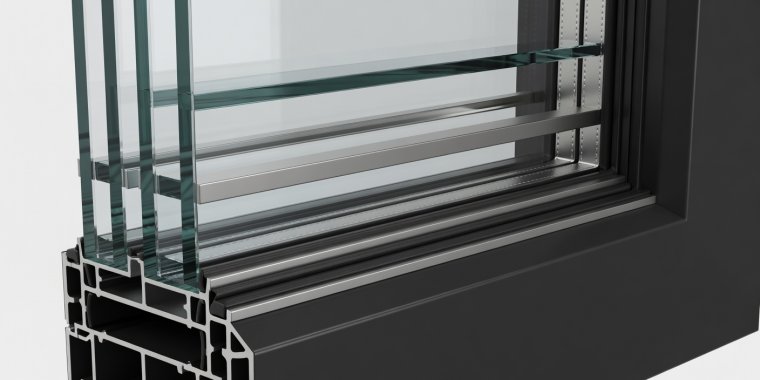
Cavity Width and Convective Rollers
A common misconception is that widening the gap between window panes continually improves insulation. In reality, thermal resistance peaks around 14mm to 16mm for air and argon. If the gap is widened to 22mm or more, temperature differences between the cold exterior glass and warm interior glass initiate buoyant convective loops ("convection rollers"). Warm gas rises along the inner pane while cold gas cascades down the outer pane, dramatically increasing heat loss.
Inert Gas Dynamics: Argon vs Krypton vs Xenon
Trapping heavy noble gases inside the hermetic IGU cavity retards heat transfer because these monoatomic gases have higher mass and lower thermal conductivity than ordinary air (which consists primarily of diatomic nitrogen and oxygen).
| Gas Fill | Molecular Weight | Thermal Conductivity (W/mK at 0°C) | Optimal Gap Depth | Cost Factor |
|---|---|---|---|---|
| Dry Air | 28.97 g/mol | 0.024 | 16 – 20 mm | Baseline |
| Argon (Ar 90%) | 39.95 g/mol | 0.016 | 14 – 16 mm | Modest (+2-4%) |
| Krypton (Kr) | 83.80 g/mol | 0.0088 | 8 – 10 mm | Substantial (+30-50%) |
| Xenon (Xe) | 131.29 g/mol | 0.0051 | 6 – 8 mm | Prohibitive (Specialized) |
Argon is the global industry standard for architectural double and triple glazing due to its balanced cost and performance. Krypton provides double the thermal insulation in a much narrower profile (8-10mm), making it indispensable for historic retrofits and slender wood frames where sash thickness cannot accommodate wide 44mm triple-glazed IGUs.
Gas Leakage and Longevity Standards
Under international standards such as EN 1279-3 and ASTM E2188, a certified IGU must keep its annual gas leakage rate below 1% per year. Dual-seal construction is mandatory to achieve this:
- Primary Seal: Polyisobutylene (PIB) applied to both sides of the spacer bar, serving as a vapor and gas barrier with virtually zero permeability.
- Secondary Seal: Polysulfide, polyurethane, or structural silicone, providing structural shear strength and mechanical bonding around the perimeter.
A properly assembled unit retains over 80% of its initial argon concentration even after 25 years in service.
Warm-Edge Spacer Evolution
Historically, window manufacturers utilized hollow extruded aluminum spacer bars filled with molecular sieve desiccant. Because aluminum has high thermal conductivity (~160 W/mK), it acted as a major thermal bridge around the glass perimeter. This chilled the edges of the room-side pane, leading to perimeter frost, mold growth, and premature seal failure.
Modern architectural glass specifies warm-edge spacers manufactured from stainless steel composite, structural foam, or fiberglass-reinforced plastics (~0.15 to 0.20 W/mK). This increases edge-of-glass temperatures by up to 5°C, improving comfort and extending seal life.